Basic HTML Version


7
pursuing ways to diagnose it sooner.
To diagnose rheumatoid arthritis,
your physician will take your medical
history and perform a physical exami-
nation. He or she will look for certain
symptoms, including swelling, warmth,
limited motion in joints and nodules
under the skin. Your doctor may also ask
if you experience fatigue. The pattern of
affected joints can also help distinguish
rheumatoid arthritis from other conditions.
Treatment
The goal of osteoarthritis management is to
control joint pain and stiffness. Analgesics and
topical pain relievers alleviate discomfort, but
they don’t reduce inflammation. Oral and inject-
able corticosteroids control inflammation, but
they aren’t recommended for frequent or long-
term use. Surgery, including joint replacement, may
be an option for extremely damaged joints. Physical
activity and weight loss are two effective nondrug
treatments for osteoarthritis—every pound lost
reduces the burden on your knees by 4 pounds.
For rheumatoid arthritis diagnosis, the treatment
should aim to slow disease progression and lower the
chances of damaging the joints. Medications for rheu-
matoid arthritis can be divided into two groups: those
that help relieve symptoms and reduce inflammation
and those that can modify the disease or put it in remis-
sion. Your physician may recommend using two or more
together. Some medications affect the immune system or
may have side effects, making careful monitoring important.
The best outcome
Research continues to uncover insights into causes and
improved treatments. Both osteoarthritis and rheumatoid
arthritis are helped by early diagnosis, effective treatment and
a healthy lifestyle that includes moderate physical activity.
“Whenever we treat arthritic conditions, our main goal is to
help the patient achieve a pain-free and functional lifestyle,”
Dr. Turki said. “We want to help you do what you can do with-
out discomfort.”
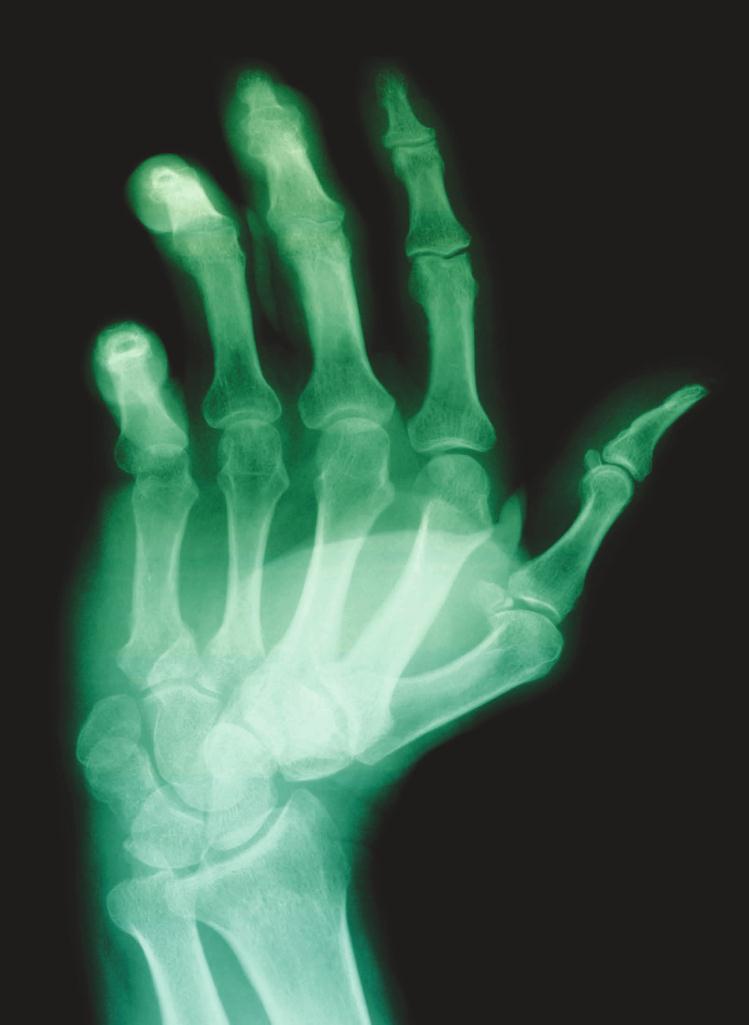
“To diagnose rheumatoid arthritis, blood work will usually be
recommended; however, a rheumatoid hand can be easily identified by
appearance. While surgery is always a last option, replacements may
be necessary based on the severity of the deformities, especially if the
patient is not responding to oral treatments.” —Hussein Turki, MD