This is a SEO version of JacksonHospital. Click here to view full version
« Previous Page Table of Contents Next Page »JACKSON HOSPITAL
OFFERING ANTERIOR-APPROACH HIP REPLACEMENT
Anterior approach hip replacement is a relatively new procedure and is not as common as traditional hip replacement. Although its popularity may not have blossomed, it is a technique that shouldn’t go unnoticed. Michael Manning, DO, with Alabama Orthopaedic Specialists, now performs this hip replacement method on Jackson Hospital’s campus, one of the few medical facilities in Alabama where this is available.
“Anterior approach is a minimally invasive technique that allows us to access the actual joint from the front rather than the side or the back,” Dr. Manning said. “Since the incision doesn’t require the separation of muscle, the recovery time is shorter and oftentimes less painful.” However, Dr. Manning cautions that not all patients are candidates for anterior approach.
“While many people who need hip replacement surgery will qualify as candidates, it may not be the right surgery for all patients,” he says. “It’s important to have the appropriate exam and consultation with your physician to determine the best technique for you.”
WHAT IS ANTERIOR APPROACH?
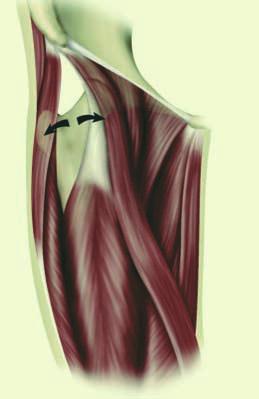
Anterior approach is a muscle-splitting approach, meaning that the surgeon gets to the hip between two muscles, rather than removing and then reattaching a muscle. With this type of surgery, the hip is replaced without actually having to detach the gluteal muscles—which are the most important for hip function—from the lateral pelvis and femur. This surgical option is a much more attractive choice because of the shortened length of hospital stay and acceleration in rehabilitation therapy.
WHY ANTERIOR APPROACH MIGHT BE FOR YOU
Patients who experience anterior approach can freely bend their hip and can avoid the usual restrictions that follow traditional hip replacement.
Sexual activity is not limited after surgery.
With patients who require bilateral hip replacement, this can be performed in a single surgery, as opposed to a separate operation.
The type of prosthesis is not limited in this procedure. Replacements can be implanted with or without cement as well as modern hardware such as high density polyethylene, metal and ceramic.
Patients are discharged one to three days after surgery and can resume day-to-day activities with the use of crutches or a walker.
The incision is much smaller than with traditional surgery, and there is a much lower rate of dislocation after the operation.
TRY A DIFFERENT APPROACH • For more information about joint replacement surgery at the Jackson Hospital Orthopedic & Joint Center, call 334-293-8020 .
JACKSON.ORG • 9
LOOKING FOR RELIEF
Joints can be damaged by a variety of things, including injuries and diseases such as arthri-tis. But simple wear and tear as you age can also harm your joints.
“Seeking treatment early may allow op-tions that are less invasive than having total joint replacement surgery,” Dr. Barrington said.
Joint replacement surgery involves re-moving all or part of a damaged joint and replacing it with an artifcial one. Hips and knees are by far the most common joints to be replaced. But other joints that can be replaced include shoulders, fngers, ankles, wrists and elbows.
While replacing a joint has become com-mon in recent years, it should still be consid-ered only if all other treatment options—such s exercise and drug therapy—are unsuccessful d the pain is preventing you from leading a nor- life.
When indicated, hip and knee replacement pa-s have 95 to 98 percent good-to-excellent out-es,” said Michael Manning, DO, a surgeon with ama Orthopaedic Specialists.
uring the past 30 years, improved surgical tech-es and new implant materials have made joint acement surgery one of the most reliable and du-e procedures in any area of medicine, according e American College of Rheumatology (ACR).

NT SURGERY 101
int is formed at the point where two or more es come together.
or example, the knee joint is formed by the cap, lower leg bones and thighbone. The hip is a and-socket joint formed by the upper end of the thighbone (the ball) and a part of the pelvis called the acetabulum (the socket).
The surfaces where these bones touch are cov-ered with a smooth layer called cartilage. Normal cartilage allows nearly frictionless and pain-free movement. When cartilage is damaged, however, joints become stiff and painful.
During surgery, an orthopedic surgeon will re-move the worn cartilage from both sides of the joint. The surgeon will then replace the joint with an im-plant, usually made of metal, plastic or both. In the case of a knee replacement, for instance, the damaged ends of the bones and cartilage are replaced with metal and plastic surfaces that are shaped to restore knee movement and function. During hip surgery, the damaged ball—at the
—Continued on page 10
This is a SEO version of JacksonHospital. Click here to view full version
« Previous Page Table of Contents Next Page »